The Comprehensive Guide to Rashtriya Gokul Mission (RGM) 2026: Establishing a ₹2 Crore Breed Multiplication Farm
The dairy sector in India is undergoing a massive transformation. With the government’s push toward Atmanirbhar Bharat, the Department of Animal Husbandry and Dairying (DAHD) has revitalized the Rashtriya Gokul Mission (RGM). For the modern entrepreneur, the most lucrative part of this mission is the Breed Multiplication Farm (BMF) scheme, which offers a 50% capital subsidy—up to a staggering ₹2 Crore.
This article provides a deep dive into the scheme, the application roadmap, and the technical requirements for 2026.
Understanding the Vision of Rashtriya Gokul Mission
Launched to promote indigenous bovine breeds, RGM is not just about milk production; it is about genetic excellence. The mission aims to:
-
Increase milk productivity per animal.
-
Promote high-yield indigenous breeds like Gir, Sahiwal, Red Sindhi, and Tharparkar.
-
Distribute disease-free, high-genetic-merit (HGM) heifers to the farming community.
By providing a ₹2 Crore subsidy, the government is shifting the responsibility of breed multiplication from the public sector to private entrepreneurs, creating a sustainable business ecosystem.
The Breed Multiplication Farm (BMF) Model
To qualify for the subsidy, an entrepreneur must establish a “Breed Multiplication Farm.” This is not a traditional dairy farm; it is a specialized hub for producing elite cattle.
Key Features of the Model:
-
Minimum Capacity: The farm must house at least 200 milch cows or buffaloes.
-
Technology-Driven: Farms are expected to use Sex-Sorted Semen and In Vitro Fertilization (IVF) to ensure a high birth rate of female calves.
-
Revenue Streams: Income is generated through the sale of milk, but primarily through the sale of high-quality heifers and bull calves to other farmers and government agencies.
Financial Breakdown: The 50% Subsidy Explained
The financial structure is the most attractive part of RGM.
| Component | Description |
| Total Project Cost | Can vary based on land and tech, but subsidy is capped at ₹4 Crore total project cost. |
| Government Subsidy | 50% of the Capital Cost (Maximum ₹2 Crore). |
| Entrepreneur Contribution | Remaining 50% (can be a mix of bank loan and self-margin). |
Note: The subsidy is “Back-ended.” This means the bank will disburse the loan first, and the government will release the subsidy in installments into your loan account based on project milestones.
Eligibility: Who Can Apply?
The 2026 guidelines allow a wide range of entities to participate:
-
Individual Entrepreneurs: Passionate dairy farmers or business owners.
-
FPOs (Farmer Producer Organizations): Groups of farmers working as a company.
-
SHGs (Self Help Groups): Empowering rural women through organized farming.
-
Section 8 Companies: Non-profit organizations focused on agricultural development.
-
Private Firms: Partnership or Private Limited companies.
Technical Requirements & Infrastructure
Setting up a 200-animal farm requires precision planning. Your project report must cover:
A. Land Requirements
You need enough land for housing, milking parlors, and, most importantly, fodder cultivation.
-
Requirement: Minimum 5–10 acres (owned or leased for 15+ years).
-
Bio-Security: The farm must have a boundary wall and a quarantine shed for new animals.
B. Civil Structures
-
Main Sheds: Climate-resilient housing with proper ventilation.
-
Milking Parlor: Automated systems (Herringbone or Parallel) to ensure hygiene.
-
Calf Rearing Section: Specialized units for the “elite” future herd.
C. Machinery
-
TMR (Total Mixed Ration) Wagons: For precision feeding.
-
BMC (Bulk Milk Chillers): To maintain milk quality at 4°C.
-
Manure Management: Biogas plants or vermicompost units are highly encouraged.
Selecting the Right Breeds
Under RGM, the focus is on Indigenous Breeds. Choosing the right breed depends on your geography:
-
North India: Sahiwal, Red Sindhi, Hariana.
-
West India: Gir, Kankrej, Jaffrabadi (Buffalo).
-
South India: Ongole, Punganur, Hallikar.
-
Central India: Tharparkar, Deoni.
The Step-by-Step Application Roadmap
Step 1: The DPR (Detailed Project Report)
This is the most critical document. It must be “bankable.” It should include a 5-year cash flow projection, a technical layout, and a waste management plan.
Step 2: Online Registration
Access the official portal. You will need to upload your KYC (Aadhaar/PAN) and the DPR.
Step 3: Bank Appraisal
Once the NDDB/DAHD clears your initial concept, you must approach a scheduled bank. The bank will evaluate your creditworthiness and the project’s viability.
Step 4: State-Level Approval
The State Implementing Agency (SIA) will visit your site to verify land documents and the feasibility of the location.
Step 5: Sanction and Disbursement
After the bank sanctions the loan, the first installment of the subsidy is triggered.
Best Practices for Your Blog Post
To ensure this article ranks high on Google for farmers and investors:
-
Meta Description: “Learn how to get a ₹2 Crore subsidy under the Rashtriya Gokul Mission 2026. Complete guide on eligibility, application process, and breed selection.”
-
Keywords to Include: RGM subsidy 2026, Dairy farm project report, Indigenous cattle breeds subsidy, Government loans for dairy 2026.
-
Internal Links: Use links to other articles on farming technology or animal health on your website.
-
Visuals: Include infographics showing the “50% Subsidy Cycle.”
Common Challenges & How to Overcome Them
-
Challenge: Getting a bank loan for large amounts.
-
Solution: Maintain a clean CIBIL score and provide collateral as required by the bank.
-
-
Challenge: Mortality rates in large herds.
-
Solution: Invest in high-quality veterinary care and insurance for every animal.
-
The Impact on Local Economy
A Breed Multiplication Farm acts as a “Mother Farm” for the district. It creates direct employment for 20–30 people and indirect employment for hundreds of local fodder farmers.
Official Application Link
You can apply online through the National Dairy Development Board (NDDB) portal:
Video Prompt:
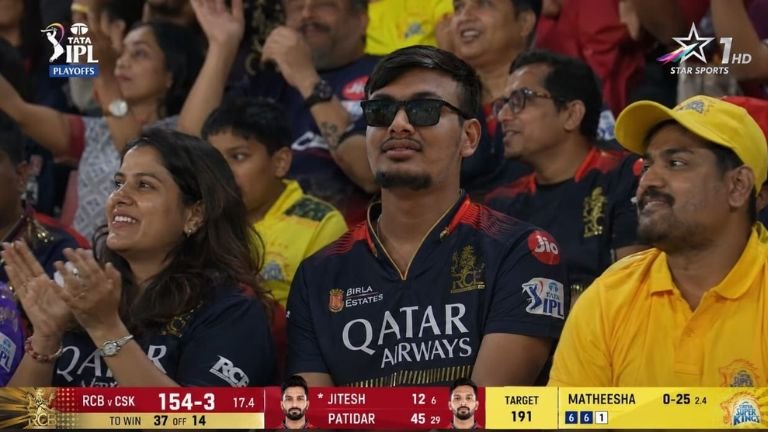
Ultra realistic IPL live TV broadcast crowd cam video of the EXACT SAME person from the reference image sitting in the crowd during a Royal Challengers Bengaluru (RCB) match.
STRICT FACE PRESERVATION:
Keep the face, hairstyle, beard, jawline, skin tone, lips, nose, and facial proportions EXACTLY identical to the reference image.
Do not beautify the face.
No AI glow-up, no model look, no cinematic hero face, no face reshaping.
Scene:
Looks exactly like a real JioHotstar / Star Sports IPL crowd cam shot captured live during a tense final over.
Authentic Indian cricket stadium atmosphere at night.
Natural broadcast camera quality with slight compression, realistic TV sharpness, subtle motion blur, autofocus breathing, and handheld zoom behavior.
The person is casually sitting in the stadium crowd wearing the same black RCB jersey and black sunglasses from the reference image.
He watches the match naturally while crowd noise and excitement happen around him.
Natural actions:
• slight head movement
• natural blinking
• briefly smiles after crowd cheers
• looks toward the field
• glances at giant stadium screen
• subtle shoulder movement
• slight breathing motion
• adjusts posture naturally
• reacts mildly after a boundary or six
• looks away awkwardly after noticing crowd cam
Background:
Packed Indian IPL crowd cheering loudly.
Fans waving RCB flags, holding popcorn, drinks, thunder sticks, and phones with flashlight on.
Visible stadium lights, LED boards, energetic audience movement.
Realistic Indian audience behavior.
Style:
100% authentic live sports broadcast realism.
No cinematic movie look.
No influencer acting.
No slow motion.
No dramatic expressions.
No TikTok style posing.
No glossy skin.
Keep natural sweat shine and realistic Indian skin texture.
Camera:
Telephoto sports broadcast lens.
Slight live camera shake.
Natural crowd cam zoom-in behavior.
Realistic TV framing.
Aspect ratio 4:3
Duration 6 seconds